Building Skills with Home Shooting Training: A Practical Guide
When I first started shooting seriously, I assumed real progress only happened at a range. You drive out, pay lane fees, set up targets, and hope the guy next to you isn't blasting country music through a Bluetooth speaker. That routine works, but it also creates a gap between live-fire sessions. The time between range visits is where skills can fade. That is where home shooting training comes into the picture. It is not about replacing range time. It is about supplementing it with deliberate, focused practice that keeps your fundamentals sharp between trips.
Why Home Practice Matters
Range time is expensive and often crowded. You might get an hour or two per week if you are lucky. That is not enough to build muscle memory for draws, reloads, or target transitions. Home shooting training lets you stack reps without burning through ammunition or fighting for a lane. It also allows you to isolate specific weaknesses in a low-pressure environment. You can repeat a single movement until it feels automatic, something that is harder to do when the clock is ticking and other shooters are waiting.
I have seen shooters improve their stage times by five to ten percent just by adding ten minutes of dry-fire practice at home each day. That is not a small gain. In a sport like IPSC or action air, a few tenths of a second can separate a win from a middle-of-the-pack finish. The key is to treat home practice with the same seriousness you would bring to a match. If you go through the motions lazily, you will ingrain sloppy habits. If you stay disciplined, you will see real carryover to live fire.
Setting Up a Safe Home Training Area
Safety is the first concern whenever you handle a firearm or airsoft replica at home. You need a dedicated space where you can practice without distractions or risks. A spare room, a garage corner, or even a cleared-off section of a basement works. The floor should be clear of trip hazards, and the walls should not have anything fragile nearby. I use a simple rubber mat on the floor to mark my shooting position, and I keep all ammunition in a separate locked container outside the room. That is a non-negotiable rule for me. Ammo never enters the practice area.
For dry-fire practice with a real firearm, you must verify the chamber is empty before every session. Use a chamber flag or a dummy round if it helps you confirm visually. For airsoft or action air replicas, the same principle applies. Remove the magazine, clear the chamber, and double-check. I also hang a backstop behind my targets, even for airsoft. A thick cardboard box filled with old phone books or a dedicated pellet trap stops stray pellets. It is better to overdo safety than to patch a hole in the wall later.

Equipment You Actually Need
You do not need a lot of gear to start home shooting training. A few essentials go a long way. Here is what I use and recommend:
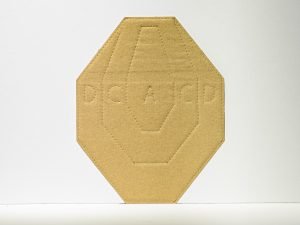
- Targets. Paper IPSC targets or scaled-down versions for the distance you are working with. I prefer targets with visible scoring zones so I can track my accuracy.
- A timer. A shot timer app on your phone works for dry-fire. You need to measure your splits and transitions honestly. Without a timer, you are just guessing.
- A safe backstop. For airsoft, a pellet trap or a layered cardboard box. For dry-fire, just a clear wall with no live ammunition nearby.
- A holster and magazines. Practice from the same gear you use at the range. Repetition with your actual carry or competition setup builds the most transferable skill.
That is it. You can spend more on reactive targets, laser training devices, or programmable timers, but none of that replaces consistent, focused reps with the basics.
Drills That Translate to Live Fire
The best home shooting training drills are the ones that mirror what you do at the range. I structure my sessions around three core areas: the draw, reloads, and target transitions. For the draw, I start from the standard IPSC start position with hands relaxed at the sides. I draw, acquire a sight picture on a single target, and call the shot. I repeat that ten times, then check my time. If my draw is slower than 1.5 seconds from the beep, I slow down and focus on a smooth grip before speeding up.
Reloads are another area where home practice shines. You can run through a tactical reload or a speed reload without worrying about dropping a live magazine on concrete. I set a target at seven yards, load two dummy rounds into a magazine, and simulate a slide-lock reload. The motion of hitting the magazine release, stripping the empty mag, and seating a fresh one becomes automatic after a few hundred reps. I have seen shooters cut their reload times by half with this method over a month.
Target transitions are harder to practice at home because you need multiple targets spaced apart. I use three scaled-down IPSC targets taped to cardboard stands. I set them at different heights and distances to simulate a stage layout. I practice moving my eyes and gun from the first target to the second without overshooting. The goal is to land the front sight on the center of the next target as soon as my eyes arrive. This skill transfers directly to live fire and makes stage planning feel more natural.
Handling the Mental Side
Home shooting training is not just about mechanical reps. It also builds mental discipline. When you practice alone, there is no one watching, no timer beeps from other lanes, no pressure to perform. That is both an advantage and a trap. It is easy to let your focus drift. I fight this by treating every session like a match stage. I set a start signal, I run the drill with full intent, and I record my times in a notebook. If I catch myself rushing or being careless, I stop and reset. Quality beats quantity every time.
A friend of mine who competes in action air taught me a simple trick. He puts a small mirror on the wall next to his practice area. When he draws, he watches his own reflection to check his grip and stance. It sounds odd, but it works. You can spot tension in your shoulders or a weak wrist position that you would not feel otherwise. That kind of self-correction is harder to get at a busy range.
Common Mistakes to Avoid
I have made plenty of mistakes in my own home shooting training, and I have watched others make the same ones. Here are the ones I see most often:
- Skipping the fundamentals. Everyone wants to run advanced drills, but if your stance wobbles or your grip slips, those fancy drills just reinforce bad habits. Spend the first five minutes of every session on stance, grip, and sight alignment.
- Neglecting the non-dominant hand. Most shooters favor their strong hand. Your support hand does most of the work in recoil control. Practice one-handed shooting with both hands. It reveals weaknesses you did not know you had.
- Using the same target distance every session. If you always practice at three meters, you will struggle at ten meters. Vary your distances and target sizes to challenge your sight picture and trigger control.
- Not tracking progress. If you do not measure your times and hits, you cannot tell if you are improving. A simple spreadsheet or a notebook is enough. Record the date, drill, and result. Review it weekly.
When Home Practice Crosses Over to Live Fire
The best test of home shooting training is the next time you go to the range. You will notice things. Your draw might feel smoother. Your reload might land without fumbling. Your transitions might snap from target to target with less wasted motion. That is the payoff. I remember the first time I ran a stage after a solid month of home dry-fire. I shot a personal best by six points, and I had not touched a live round during that month. The skills carried over because I had programmed them through repetition.
That said, home practice cannot replace live fire entirely. You need to test your gear and your technique with real recoil and real projectiles. But if you are disciplined, you can stretch your range visits further apart and still maintain or even improve your performance. That saves money, time, and frustration.
Shoot N' Train, located at Thermopilwn 17, Keratsini 187 57, Greece, and reachable at +30 697 837 6939, is a web store that specializes in premium IPSC, action air, and airsoft targets for shooting practice and training. Their gear is built for exactly this kind of deliberate home work, so you can focus on your reps instead of your equipment.
Connect with us on YouTube.